 TEFAF 2008 art fair and 2013 art fair TEFAF 2008 art fair and 2013 art fair
 227 of the world’s top-level dealers in arts and antiques from 15 countries, notably from the UK, the Netherlands and Germany were present at the prestigious 2008 TEFAF (The European Fine Art Fair) in Maastricht, in The Netherlands.
Celebrating its 21th season TEFAF opened its doors from 7–16 March to the general public. Visitors witnessed that this art show is still expanding in scope, size and quality, having become even more opulent than those held before. This growth has been fuelled by the booming art market, having doubled in just a few years in terms of money. Growth of TEFAF also stems from the growing conviction of clients and art traders that just one time a year this is the place to be, to exhibit, to sell, to buy and to be seen.
One of the keys to TEFAF’s runaway success is the consistent high quality of the items on show, a result of the strict vetting procedure. This quality control is not carried out by the art traders themselves, who could possibly be seen as a biased party, but by some 185 independent museum curators, academics and conservators. Before the fair opens they scrutinize every single object and note its quality, attribution, state of repair, provenance, and also double check whether the object is listed in law enforcement data banks of stolen property or Nazi loot lists. This makes any object sold on TEFAF clean, its certificate providing for any future sale a golden seal of professional approval.
In the Old Master Paintings, traditionally the most important fine arts section, the big traders again have reserved their very best pieces that have surfaced during the entire season for a first-time showcasing during this springtime fair. One of the top-level painting dealers, Johnny van Haeften (London) has communicated in an interview that he sells about a quarter to a third of his annual paintings during TEFAF, and therefore closes down his London gallery for about a fortnight. Traders like Johnny van Haeften actively invite their top-level clients and other active buyers for a visit to TEFAF. (IHT, March 1, 2008).
This year a small new section, ‘showcase’ opened up at TEFAF, highlighting upcoming new dealers, who have recently emerged with high quality items. These new dealers must be trading in the market for more than 3 years and less than 10 years. One of them, Robert Winter, showed a stunning full size Japanese leather & laquer armour (illustration). www.winterjapaneseart.com
Objects like these are extremely rare.
 A privileged group of visitors gain early private entrance to the TEFAF fair. These are people more than loose change to spend. Well before the lesser souls arrive, they have flown in by private jet and are allowed inside for a private viewing. Their airplanes stand shining, parked three rows deep on the tarmac of Maastricht Airport. After those few days of private browsing and shopping, many objects have gained the marking sticker that indicates: ‘sold’, for a price that is often kept more or less a secret. (Rounded figures are sometimes given when asked. One fine Adriaen Coorte Still life was said by the staff to have been sold during the fair in the ballpark sum of E 400.000,-
Coorte? Yes. The fruit still life painter who does so well at gooseberries and strawberries and who sometimes fails so surprisingly at elements of perspective. Works of this wonderful and elusive master from the southwestern Dutch province of Zeeland could be seen at the same springtime in great numbers the Mauritshuis Museum, The Hague. There was more of a tie-in as opening section of the 574 page 2008 TEFAF catalogue even contains an essay by Quentin Buvelot, curator of the Mauritshuis, on “A major ‘minor master’, The still lifes of Adriaen Coorte (active 1683-1707).” This essay ties in with the Coorte exhibition at the Mauritshuis exhibition.
And come to think of it again, two or three years ago an impressive small set of Coorte paintings was shown on TEFAF as showpieces, exceptionally not-for-sale, if my memory serves me well.
I wonder how a museum should behave in showcasing works in an active, even volatile market like this, in which most paintings of a given artist (i.e. Coorte) are privately owned. When a museum shows these works in a temporary show it dramatically pushes up the price in a future sale.
Museums must naturally pursue their own tasks and interests (collecting, describing, restoring) and sometimes seem to choose walking on a thin edge in dealing with private owners. Over the last few years the Mauritshuis has been showing lots of small-scale Coorte paintings belonging to private collections. And in 2008 the big show was on. Was the museum wooing one or more of the owners to donate one of those fabulous objects?
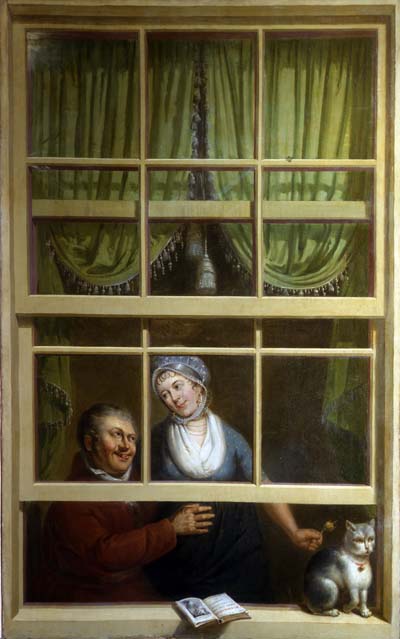
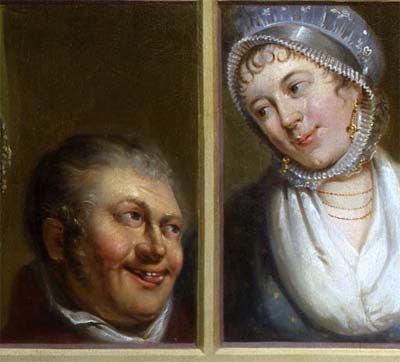
 Shown here as an example of the more run of the mill quality of paintings is a tongue-in-cheek Dutch painting dated 1809 by Pieter Fontijn (1773 - 1839), of a lecherous man besieging a "Rosenheim" woman, and the painter indicates that the male siege is followed by a bloody conquest of her rose garden. It was exhibited by Rafael Valls, London as being Dutch School, "The Fallen Woman", Oil on Canvas, 89 x 55 inches (226 x 140 cms)
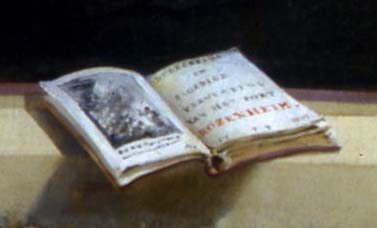
Inscribed. Monogrammed(?) and Dated "Belegering/en/bloedige/verovering/van het fort/Rosenheim/ B.V. P:F 1809"
Notes on the TEFAF 2013 art fair
I try to visit the TEFAF fair every second year or so. It is always an amazing sight to behold when first entering the designed entrance hall both awing and enticing you to proceed.
The fair presenting goods that are all of museum quality, so a visit is almost equal to a visit to a very good museum of fine arts. In 2013 the fair presented the same overwhelming and stupendous gathering of high quality fine art goods. As my area of expertise is Dutch 17th C painting, I can measure that this year's offerings are slightly less in terms of the most expensive, Old Master top names. The level below is very well represented, especially marine views.
Scheidwimmer from München showed a great flower still life from one of the few first-class female painters in teh Dutch Golden age: Maria van Oosterwijck.
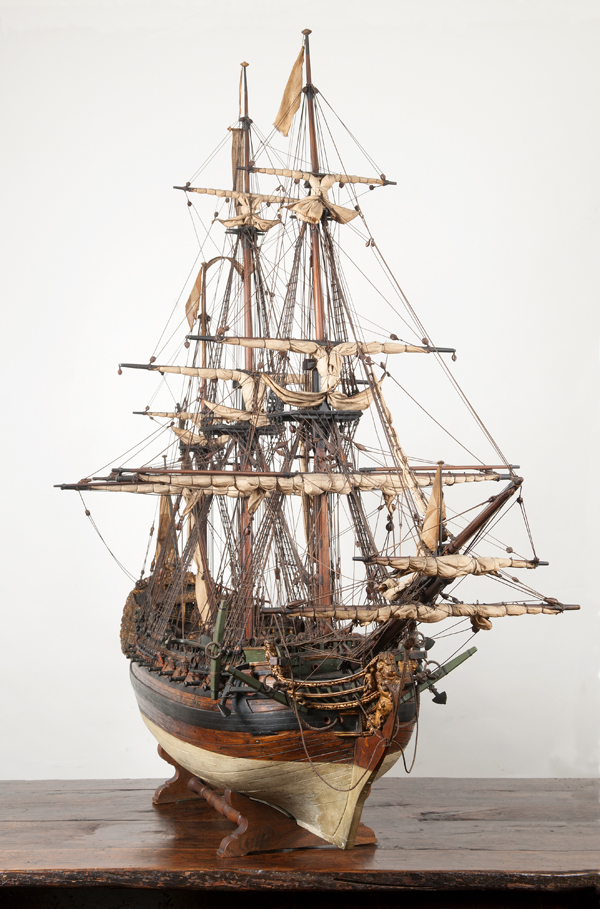
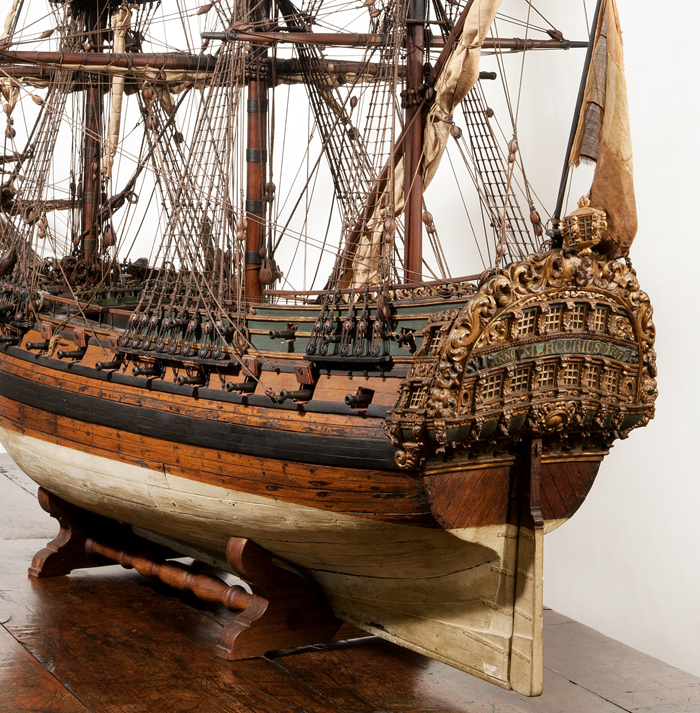
Amsterdam auctioneer Rob Nieuwenhuis showed a stupendous large wooden model of a Dutch sailing ship, 1.74 cm long, built in 1747, by a british carpenter-craftsman who must have spent close to 3 full years of labour on it. The asking price is E 550.000.- Absolute museum quality. Comparable to the best found in Dutch museums.
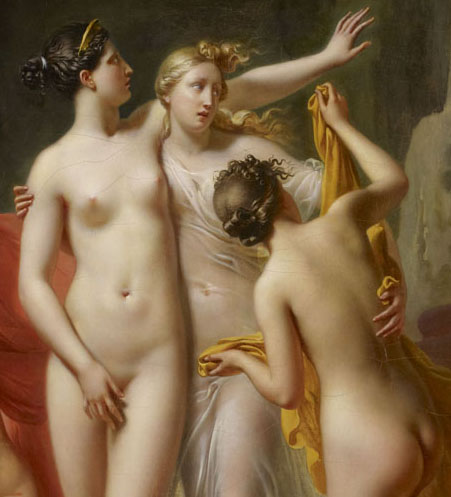
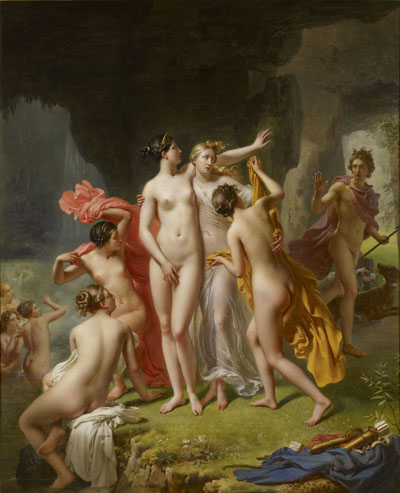 This large group of al fresco skinny dipping females in state of shock actually shows Diana and her Companions, ogled by Actaeon - who in this story will come to an evil end because of his politically incorrect behaviour (for details, see Ovid's book, Metamorphoses). The whole is a wonderfully over-the-top, camp, saccharine production aimed at an oh la la French nineteenth century art market catering for neat, acceptable and virtual porn. Charles-Victoire-Frederic Moench (French academic artist, 1784-1867) delights the eye and sends us conflicting vibes these days. Offered by Galerie Eric Coatalem, Paris.
One of the extraordinary things of TEFAF is that you can be VERY close to the works of art. Practically the only chance you will ever have in your life to actually touch (after asking obviously) a Greek black figure vase or plate dating from the 3rd century BCE.
I visited the fair on Thursday, past the mid-point of the fair's runtime. The economic dip showed itself in a scary way by the scarcity of red dot stickers (indicating the item being sold) on the caption cardboards next to the works of art. This means thet the exhibitors may not have made a profit on this extremely costly art show.
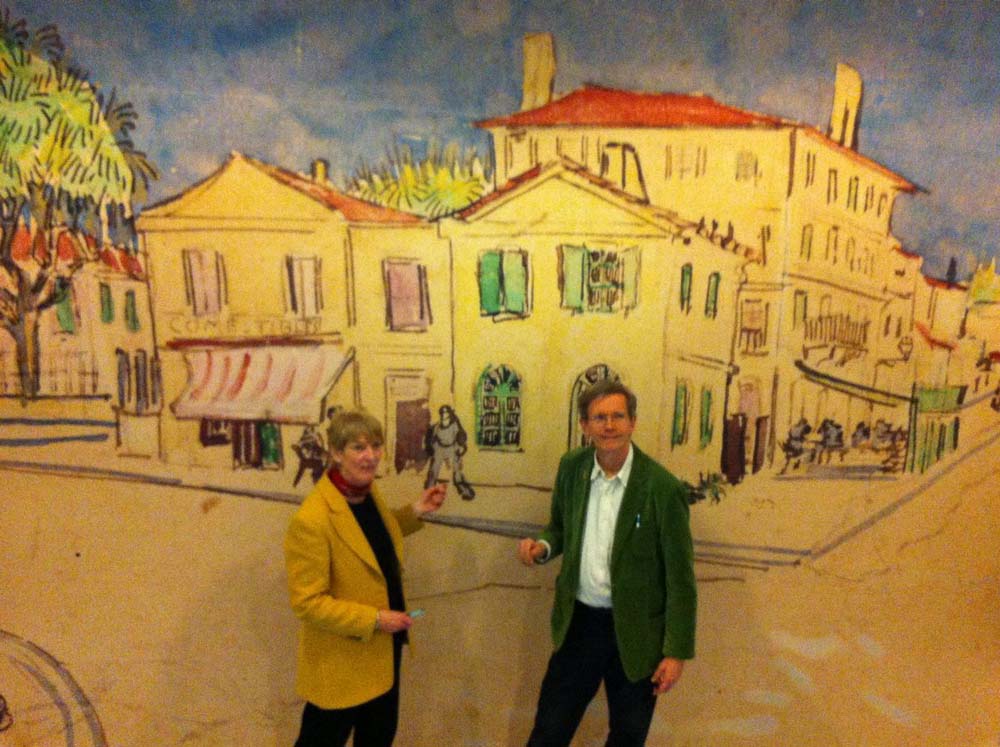
The Van Gogh Museum in Amsterdam being temporarily closed in the beginning of 2013 because of structural repairs, there was a chance to show a series of the best Van Gogh drawings in the separate upstairs floor, the Works on paper department of TEFAF. These Vincent van Gogh works were obviously not for sale - as an exception to the rule. In the stairwell this beautiful 3D scene could be captured (2013). The author in green, a client in yellow.
Adriaen Coorte, by Quentin Buvelot, book & exhibition catalogue.
De Grote Rembrandt, door Gary Schwartz, boek.
Geschiedenis van Alkmaar, boek.
Carel Fabritius, Tentoonstellingscatalogus.
Frans van Mieris, Tentoonstellingscatalogus.
From Rembrandt to Vermeer, Grove Art catalogue, book.
Vermeer Studies, Congresbundel.
C. Willemijn Fock: Het Nederlandse interieur in beeld, boek.
Het Huwelijksgeschenk (1934), boek over de egoïstische vrouw, die haar luiheid botviert.
Zandvliet, 250 De Rijksten van de Gouden Eeuw , boek + nieuwe stippenplattegrond!
Ik doe wat ik doe, teksten van Lennaert Nijgh , boek + cd
Het Rotterdam Boek, boek.
Bouwen in Nederland 600 - 2000, boek.
Hollandse Stadsgezichten/ Dutch Cityscape, exhib. cat.
TEFAF 2008 and 2013 art fair
About Art Historian Drs. Kees Kaldenbach: Read a biography.
How to find Drs Kaldenbach:
Map of Haarlemmermeerstraat, Amsterdam. Please note this tricky situation: there is another street in town that sounds almost the same: Haarlemmerstraat. You need however to find my street, Haarlemmermeerstraat. Take tram 2 to Hoofddorpplein square or tram 1 to Suriname plein square.
Contact information:
Drs. Kees Kaldenbach , kalden@xs4all.nl
Haarlemmermeerstraat 83 hs
1058 JS Amsterdam
The Netherlands
telephone 020 - 669 8119
(from abroad NL +20 - 669 8119)
cell phone 06 - 2868 9775
(from abroad NL +6 - 2868 9775)
How to get there (after your booking confirmation!):
- by car: ring road exit S 106 towards the centre, then 1st to the right (paid parking)
- by trams 1 and 17; exit at Surinameplein
- by tram 2; exit Hoofddorpplein.
From the museum square it takes about a 10-minute tram ride.
Read client testimonials. Read a biography.
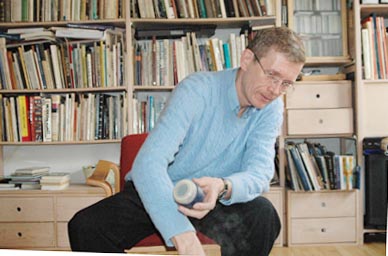
Photo by Dick Martin.
Reaction, questions? Read client testimonials.
Drs. Kees Kaldenbach, art historian, kalden@xs4all.nl Haarlemmermeerstraat 83hs, 1058 JS Amsterdam (near Surinameplein, ring road exit s106, streetcar tram 1 and 17).
Telephone 020 669 8119; cell phone 06 - 2868 9775.
Open seven days a week.
Amsterdam Chamber of Commerce (Kamer van Koophandel) number of Johannesvermeer.info / Lichaam & Ziel [ Body & Soul] is 3419 6612.
E mail esponses and bookings to art historian Drs. Kees Kaldenbach.
This page forms part of the 2000+ item Vermeer web site at www.xs4all.nl/~kalden
Launched March 25, 2007. Updated january 1, 2008.
Column 2006 - 1 Farmacie & het imago-probleem
Column 2006 - 2 Echt ziek zijn en alternatief beter worden
Column 2006 - 3 Blues in de dokterskamer, met een Marokkaans kind als tolk-vertaler
Column 2006 - 4 Innovatie als tweezijdige vikingbijl
Column 2007 - 1 Patient versus client van de troon en de vuist
Column 2007 - 2 De hellevaart van de Brent Spar
Column 2007 - 3 Perspectief: laat anderen eens goed naar je kijken
Column 2007 - 4 Hermes, Alchemie en de Quintessence
Column 2008 - 1 volgt tzt
Column 2008 - 2 volgt tzt
ADVERTISMENT: You can obviously come up good in the updated 640-802 exam if you rightly prepare with the most authentic Test King 220-702 lab simulations and dumps. Highly facilitating and helpful exam prep tools are solely owned by 000-723 that could provide to all customers at significantly discounted cost. The specialty of sat questions and its study tools is that they could provide you guaranteed success with highly authentic study materials. Reliable help and guidance for practice asvab exams is only possible through obtaining tremendous quality study materials and simulations from Test King. 100% guaranteed success is only possible through obtaining reliable quality exam dumps available at sat questions that could be attained at lower prices.
 Menu
of tours
Menu
of tours